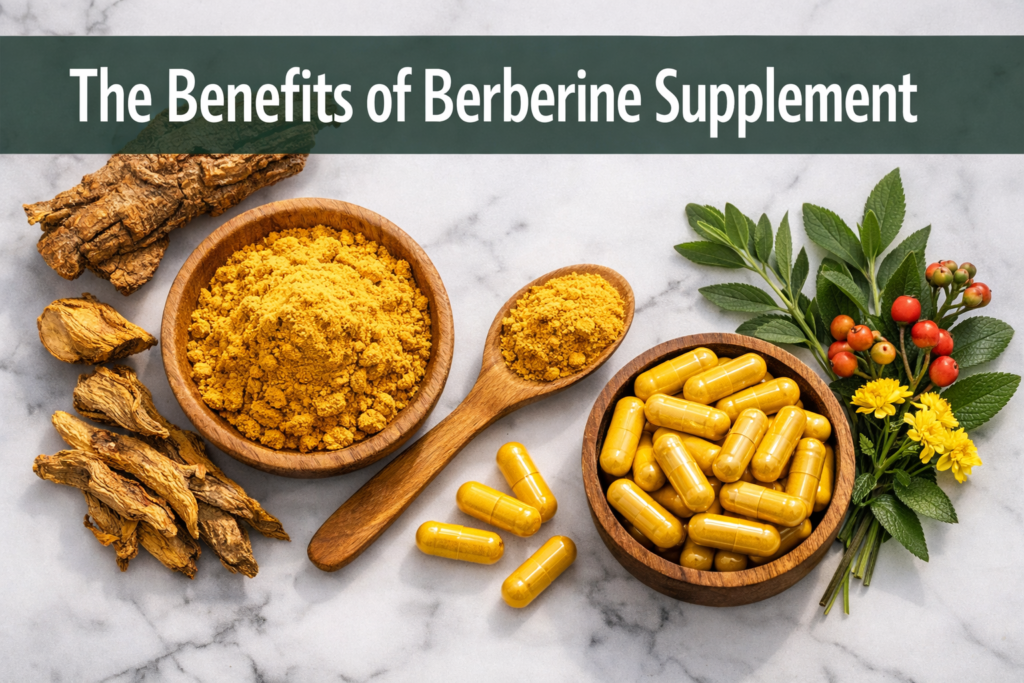

What if a natural compound found in plants could rival prescription drugs for blood sugar control, cholesterol management, and weight loss — all in one capsule? That’s the growing promise behind berberine, and the research supporting the benefits of berberine supplement is hard to ignore. From ancient Chinese medicine to modern clinical trials, this bright-yellow alkaloid is earning serious attention from scientists, doctors, and health-conscious individuals alike.
Key Takeaways 📋
- 🩸 Blood sugar control: Berberine reduces fasting glucose and HbA1c at rates comparable to — or exceeding — metformin in some studies.
- ❤️ Heart health: It lowers LDL cholesterol by 15–25% and raises HDL, making it a potential alternative for statin-intolerant patients.
- ⚖️ Weight management: Berberine activates AMPK pathways that reduce fat storage and boost fat-burning thermogenesis.
- 🦠 Gut and brain health: Emerging research links berberine to improved gut microbiome diversity and potential cognitive protection.
- ⚠️ Individual results vary: Efficacy differs between people, and berberine should complement — not replace — medical care.
What Is Berberine and How Does It Work?
Berberine is a bioactive alkaloid extracted from several plants, including Berberis vulgaris (barberry), goldenseal, and Oregon grape. It has been used in traditional Chinese and Ayurvedic medicine for centuries, primarily for its antimicrobial and anti-inflammatory properties.
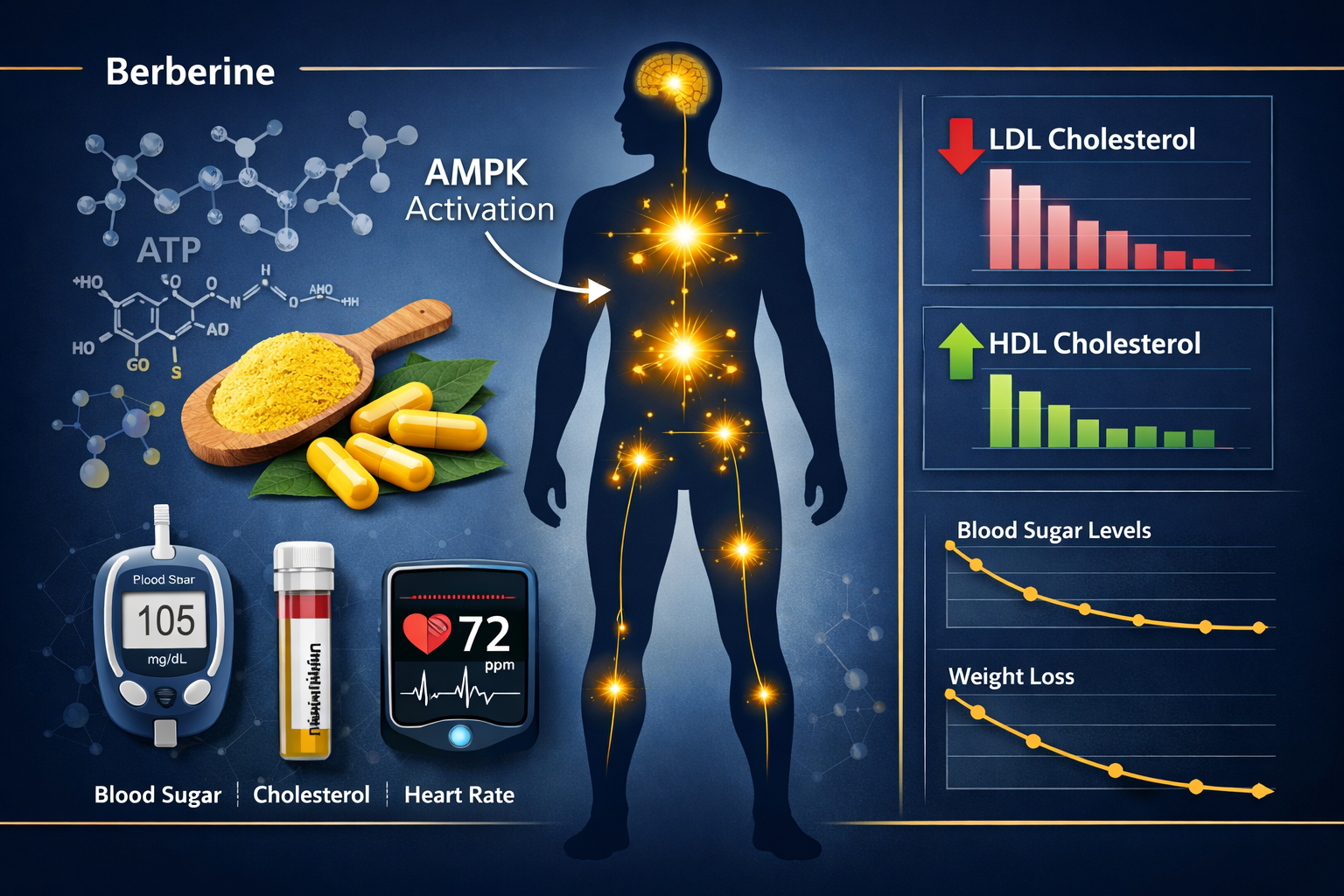
Modern science has identified a key mechanism behind many of its effects: AMPK activation. AMPK (adenosine monophosphate-activated protein kinase) is often called the body’s “metabolic master switch.” When berberine activates AMPK, it triggers a cascade of beneficial effects [6]:
- ⚡ Increases energy production at the cellular level
- 🔽 Reduces energy storage (less fat accumulation)
- 🔥 Accelerates glucose and fat metabolism
- 🛡️ Delivers anti-inflammatory effects throughout the body
“Berberine’s ability to activate AMPK places it in a unique category — a natural compound with drug-like metabolic effects.”
This single mechanism helps explain why the benefits of berberine supplement span so many different health areas.
The Core Health Benefits of Berberine Supplement
🩸 Blood Sugar and Diabetes Management
One of the most well-studied benefits of berberine is its ability to lower blood sugar levels. Research shows it improves insulin sensitivity and slows carbohydrate absorption in the gut, leading to lower fasting glucose and reduced HbA1c (a long-term marker of blood sugar control) [2][4].
Perhaps most impressive is how it stacks up against conventional medication. A meta-analysis of 37 studies involving over 3,000 type 2 diabetes participants found that berberine reduced HbA1c by 31%, compared to metformin’s 28% reduction [5].
| Metric | Berberine | Metformin |
|---|---|---|
| HbA1c Reduction | ~31% | ~28% |
| GI Side Effects | Fewer reported | More common |
| Availability | Over-the-counter | Prescription |
Bonus: The berberine group in comparative studies experienced fewer gastrointestinal side effects than those taking metformin, and combining berberine with oral diabetes medications did not significantly increase adverse events [5].
❤️ Cholesterol and Cardiovascular Health
Heart disease remains a leading global health concern, and the benefits of berberine supplement extend meaningfully into cardiovascular territory.
Clinical data shows berberine can [5][6]:
- Reduce LDL (“bad”) cholesterol by 15–25%, with standardized decreases of 1.77 mmol/L
- Increase HDL (“good”) cholesterol by 1.59 mmol/L compared to control groups
- Lower triglycerides by 0.94 mmol/L in studies involving 745 participants
These results position berberine as a compelling alternative to statins for patients who cannot tolerate statin medications due to side effects like muscle pain or liver stress [6]. Its lipid-lowering effects on total cholesterol, triglycerides, and LDL are comparable to those of red yeast rice — another natural cholesterol-lowering agent.
💡 Tip: A typical effective dose in studies is 500 mg twice daily for 3–6 months to achieve meaningful lipid improvements [5][6].
⚖️ Weight Loss and Body Composition
Struggling with weight management? Berberine may offer meaningful support. Multiple randomized controlled trials show it leads to reductions in [5]:
- Body weight
- Body mass index (BMI)
- Body fat percentage
The mechanisms behind this are two-fold. First, berberine reduces fat cell creation (adipogenesis). Second, it promotes fat thermogenesis — essentially causing fat tissue to burn calories as heat rather than storing them. Both effects are tied back to AMPK activation.
While berberine is not a magic weight-loss pill, it may give a meaningful metabolic edge when combined with a healthy diet and regular exercise.
🦠 Gut Microbiome Support
The gut microbiome — the trillions of bacteria living in the digestive tract — plays a major role in metabolism, immunity, and even mood. Berberine appears to reshape gut bacteria composition, potentially supporting better digestion, reduced inflammation, and improved metabolic function [5].
It’s worth noting that much of this evidence remains in early stages, based largely on lab and animal studies. Human clinical data in this area is still developing, so these benefits should be viewed as promising rather than proven [5].
🧠 Cognitive Health: An Emerging Frontier
One of the more exciting emerging areas of research involves berberine and brain health. Recent basic research suggests berberine may [6]:
- Prevent mild cognitive impairment
- Protect against drug-induced metabolic encephalopathy (a form of brain dysfunction)
These findings push the potential benefits of berberine supplement well beyond metabolic disorders into the realm of neuroprotection. However, as with gut health, more robust human clinical trials are needed before definitive conclusions can be drawn.
Important Considerations Before Starting Berberine
⚠️ Results Vary Between Individuals
Anecdotal evidence from health forums and third-party review platforms reveals a wide spectrum of experiences with berberine [3]. Some users report dramatic improvements in blood sugar and energy levels within weeks. Others notice minimal change. This variability is common with supplements and underscores the importance of tracking personal results.
Potential Side Effects
Berberine is generally well-tolerated, but some users experience:
- 🤢 Nausea or stomach upset (especially at higher doses)
- 💨 Bloating or gas
- 🚽 Diarrhea or constipation
Starting with a lower dose and gradually increasing can help minimize these effects.
Drug Interactions to Watch
Berberine can interact with several medications, including:
- Metformin (combined use may amplify blood sugar lowering)
- Blood thinners like warfarin
- Cyclosporine (an immunosuppressant)
Always consult a healthcare provider before starting berberine, especially if taking prescription medications [2][4].
Who Should Avoid Berberine
- Pregnant or breastfeeding women
- Children and adolescents
- Individuals with severe liver or kidney conditions
How to Get the Most From Berberine
To maximize the benefits of berberine supplement, consider these practical guidelines:
- Dose strategically: 500 mg taken 2–3 times daily with meals is the most studied protocol [3][4].
- Be consistent: Benefits typically build over 4–12 weeks of regular use.
- Pair with lifestyle changes: Diet quality and physical activity amplify berberine’s metabolic effects.
- Choose quality products: Look for supplements with standardized berberine HCl content and third-party testing [1][7].
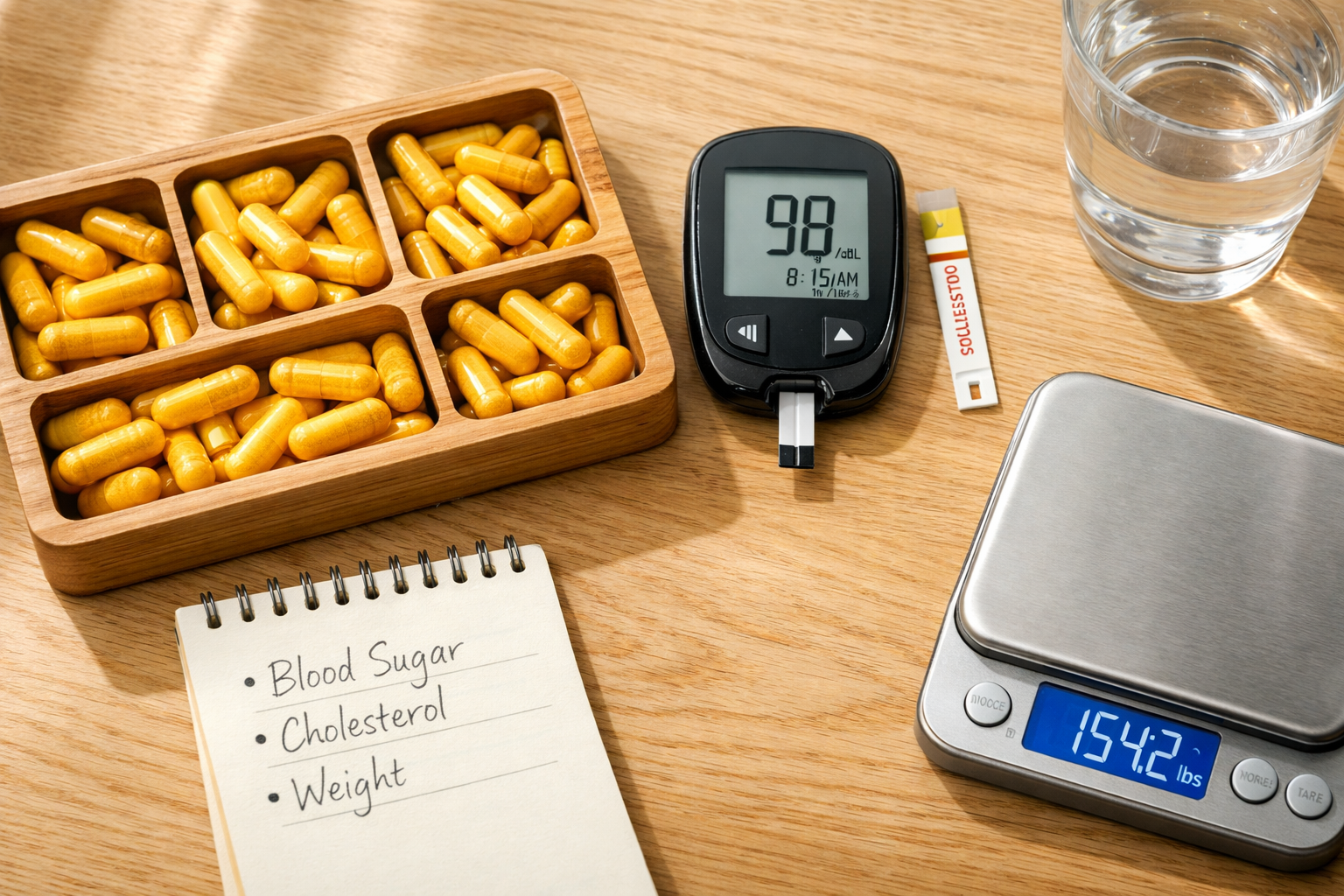
- Monitor key markers: Track fasting glucose, HbA1c, and lipid panels to assess personal response [8].
Conclusion: Is Berberine Worth It?
The science behind the benefits of berberine supplement is genuinely compelling. With clinical evidence supporting its role in blood sugar control, cholesterol management, weight loss, and emerging research in gut and brain health, berberine stands out as one of the most versatile natural compounds studied today.
Actionable next steps:
- ✅ Speak with a healthcare provider to determine if berberine is appropriate for your health goals
- ✅ Request baseline blood work (glucose, HbA1c, lipid panel) before starting
- ✅ Choose a high-quality, third-party-tested berberine supplement
- ✅ Commit to at least 8–12 weeks of consistent use while tracking measurable health markers
- ✅ Combine supplementation with a balanced diet and regular physical activity
Berberine is not a replacement for medical care, but for many people, it may be a powerful addition to a proactive health strategy in 2026.
References
[4] c213 – https://web.stanford.edu/c213/?id=berberine-benefits-in-2026-what-happens-with-daily-use-plus-safe-habits
[5] Watch – https://www.youtube.com/watch?v=vycKE0OOBnE
[6] Pmc8107691 – https://pmc.ncbi.nlm.nih.gov/articles/PMC8107691/